
“Best value safari we found anywhere, and it never felt budget. Serengeti, Ngorongoro and Zanzibar - flawless from start to finish.”
Kilimanjaro weather can swing from hot sunshine to freezing cold in a single day. Unlike most destinations, the mountain doesn’t change dramatically from season to season - instead, temperature is driven by altitude and time of day. Because it’s big enough to create its own weather, you should be ready for sun, rain, wind, cold and even snow on the same climb.
At the base of the mountain the average temperature is a mild 21-27 °C (70-80 °F). As you ascend through the climate zones it falls steadily, until night-time temperatures at the summit, Uhuru Peak, range from about −7 °C to −29 °C (20 to −20 °F). Layering is the key to staying comfortable - see our Kilimanjaro packing list.
| Zone | Altitude | Conditions |
|---|---|---|
| Cultivation | 800-1,800 m | Warm, temperate farmland with plentiful rain |
| Rainforest | 1,800-2,800 m | Warm, humid and often misty; can be muddy |
| Heath & moorland | 2,800-4,000 m | Warm days, cold nights, more exposed |
| Alpine desert | 4,000-5,000 m | Arid, strong sun by day, freezing at night |
| Arctic (summit) | 5,000 m+ | Ice, snow and bitter cold; ~49% of sea-level oxygen |
The long rains (March-May) are driven by moist south-easterly winds from the Indian Ocean, soaking the southern slopes and dropping snow on the summit. The short rains around November come from a drier north-easterly and are lighter, falling mainly on the northern slopes.
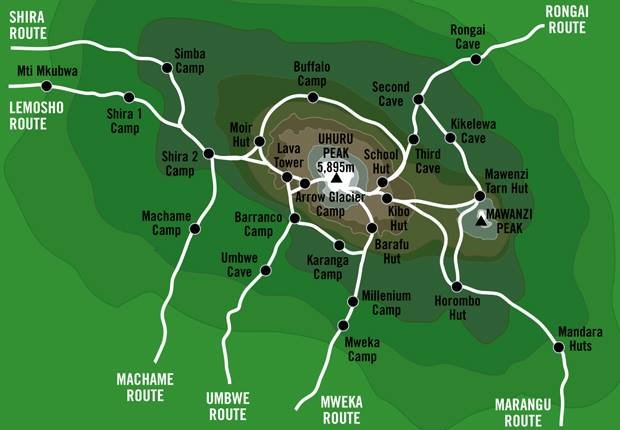
Because conditions change so quickly, the golden rule is to be prepared for everything at once: pack breathable layers for warm forest days, waterproofs for sudden showers, and serious insulation for the freezing summit push. The dry seasons offer the most stable weather and the highest summit-success rates, which is why we schedule climbs around them. Choosing a longer route also gives you more margin if a day of bad weather slows you down. For the full picture, read our guides to climbing Kilimanjaro and the best routes.
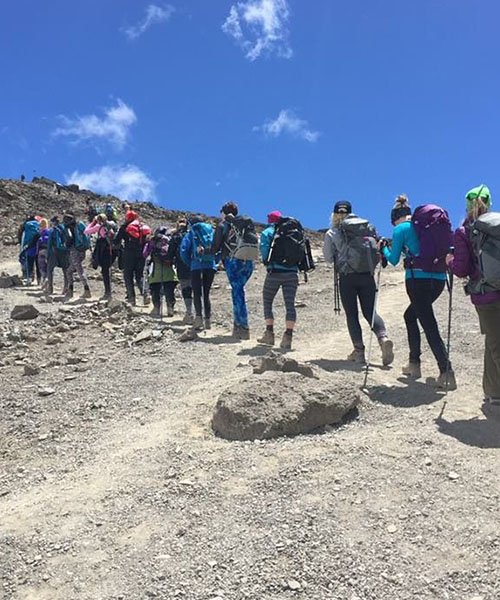
The practical answer to the mountain’s changing weather is layering. Start each day in breathable base layers, add a fleece and a windproof shell as you climb, and keep waterproofs within easy reach for sudden showers. For summit night you’ll want every insulating layer you own, plus a warm hat, gloves and hand warmers. Good sunglasses and high-SPF sunscreen are essential year-round, because the equatorial sun is intense at altitude even when the air is freezing.
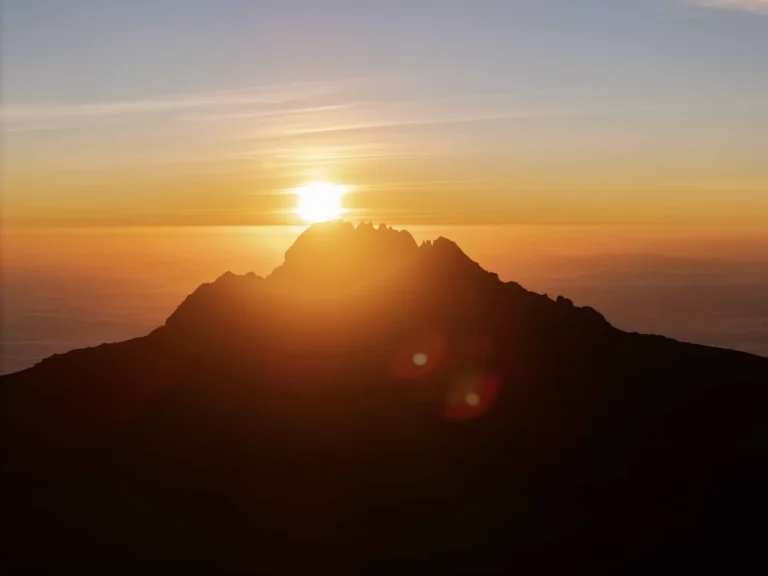
Most climbers set off for the summit around midnight to reach Uhuru Peak at sunrise. It’s bitterly cold, often with snow or ice underfoot, but the clearing dawn skies reveal vast views over Mawenzi and the plains below. You can learn more about the mountain’s protected environment via the Kilimanjaro National Park (UNESCO) listing.
Ready to turn this into a real journey? As a local, Arusha-based family team, we tailor every Tanzania safari and Kilimanjaro climb to your dates, budget and pace. Request a free, no-obligation quote or get in touch - we usually reply within 24 hours.
Talk to our local safari experts for a tailor-made itinerary that fits your dates and budget.
“Best value safari we found anywhere, and it never felt budget. Serengeti, Ngorongoro and Zanzibar - flawless from start to finish.”
“Summited Kilimanjaro via Lemosho with an incredible crew. Great gear, great food, and they got all of us to Uhuru Peak.”8 Days Lemosho Route
“An unforgettable trip. Our guide spotted a leopard on day one and knew every bird by name. Tambaa na Pori made it effortless.”